HOUR OF CODE – 2K25
The Vasireddy Venkatadri International Technological University (VVITU) consistently strives to promote technological awareness and skill development among students and the community. Reflecting this commitment, the VVITU Guntur ACM-W Student Chapter actively engages in initiatives that encourage young learners to understand modern computing concepts and technological advancements. As part of this mission, the chapter proudly organized the Hour of Code & Vibe Coding Outreach Program 2K25, an educational initiative designed to introduce school students to the fundamentals of Artificial Intelligence, Prompt Engineering, and Vibe Coding. Hour of Code is a globally recognized movement conducted every year during Computer Science Education Week, inspiring millions of students across numerous countries to explore computing through interactive sessions and simplified learning modules.
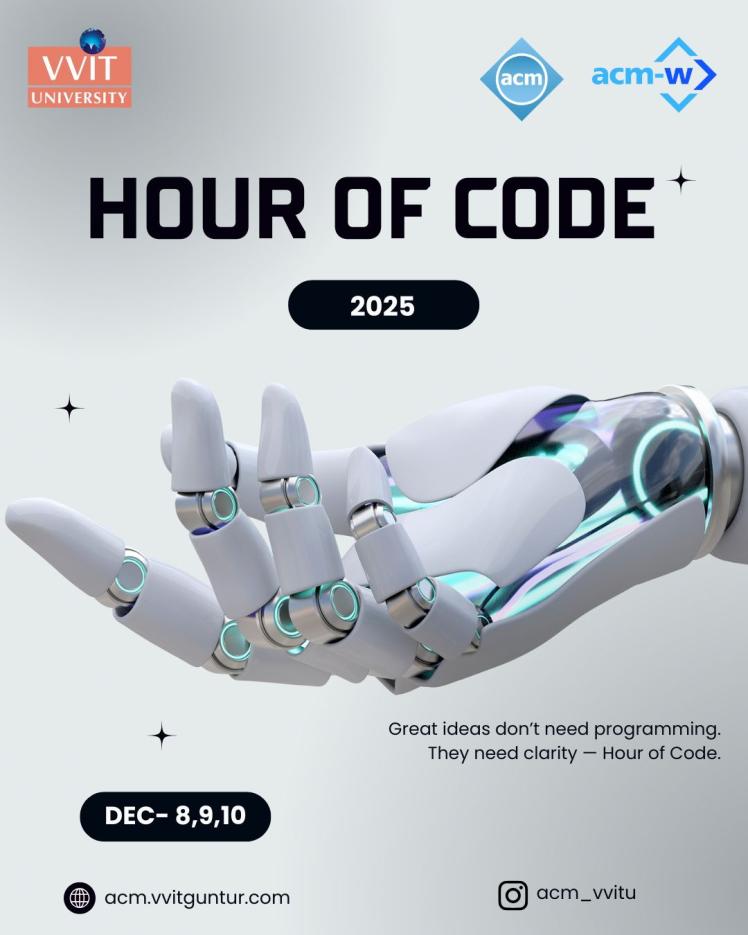
With the intent of fostering early exposure to AI and digital creativity among school children, the VVITU Guntur ACM-W Student Chapter sought approval to conduct outreach sessions at selected schools in Guntur. Upon approval, the chapter successfully carried out the program from 8th to 10th December 2025 at the following institutions:
• Sri Chaitanya School
• Sri Poojitha School
• Oxford Olympiad School
• Naveena Primary School
• Zilla Parishat High School
The objective of these sessions was to help students understand that modern technologies, especially AI are accessible, logical, and easy to explore when explained through real-life examples. The program emphasized clarity in communication, creativity in thinking, and confidence in expressing ideas to build simple digital tools using the concept of Vibe Coding.
The school administrations extended their support to the initiative, recognizing the
importance of introducing emerging technologies to students at an early age.
A team of four ACM-W student volunteers led the outreach program:
• Saranya
• Sai Charitha
• Momina
• Mani Deepika
• Maheeja
Together, they conducted engaging demonstrations, interactive discussions, real world examples, and hands-on idea-building activities tailored to the understanding level of students from different schools.
DAY-WISE SCHEDULE:
School: Sri Chaitanya School
Date: 8th December, 2025
Time: 9.30 AM – 10.30 AM
At Sri Chaitanya School in Syamala Nagar, the session introduced students to the idea-to-application workflow using Vibe Coding. Students learned to identify everyday academic challenges and convert them into digital tools through simple prompts. The team demonstrated how natural-language instructions could generate functional application components, helping students understand that clear communication alone can create meaningful digital outputs.
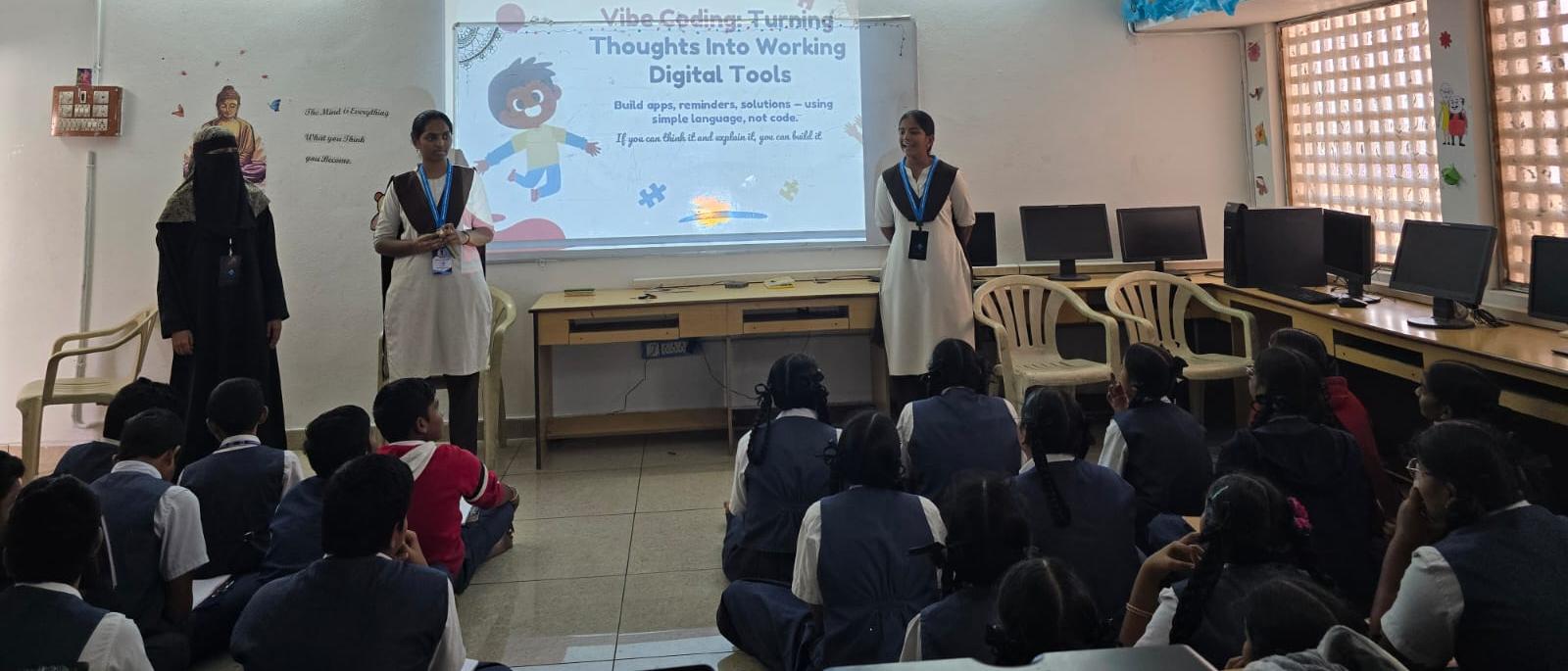
Warm Introduction with the students by Momina, Sai Charitha, Saranya
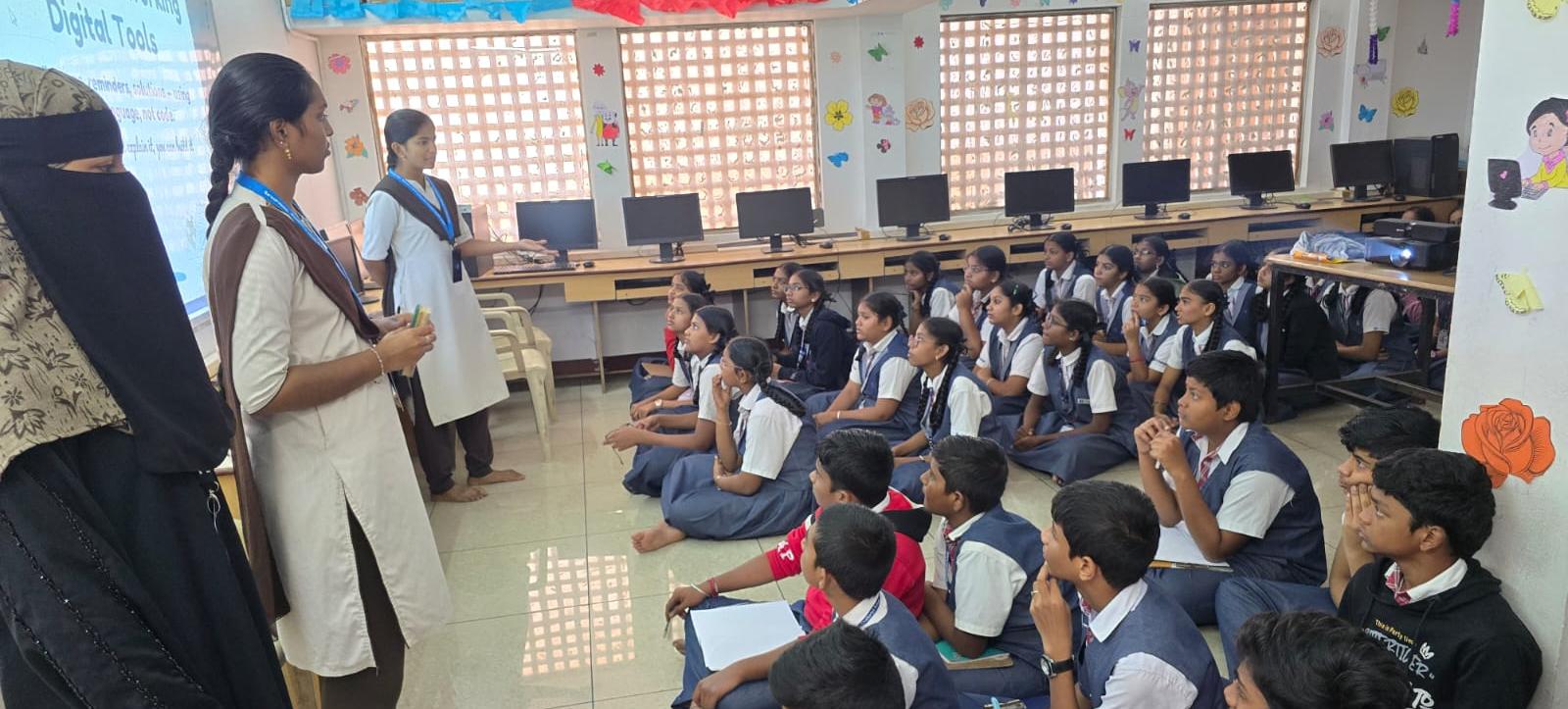
The session began with a warm introduction that connected technology to students’ everyday experiences. Students were asked about their regular use of mobile phones, apps, and digital platforms. This helped establish relevance and curiosity. AI was explained as a system that listens to instructions, understands meaning, responds logically, and improves when guided properly. Students were clearly told that AI is not magic, but a structured system that works based on logic, clarity, and patterns.
A detailed explanation was given on the concept of prompts, where students learned that a prompt is simply a clear instruction given to AI. The speaker emphasized that prompts do not need to be technical or complex; instead, they should be clear and well thought out. This explanation helped students understand that better communication leads to better results. Following this, Vibe Coding was introduced as a modern approach where students can create digital tools by describing ideas in everyday language rather than writing programming code.
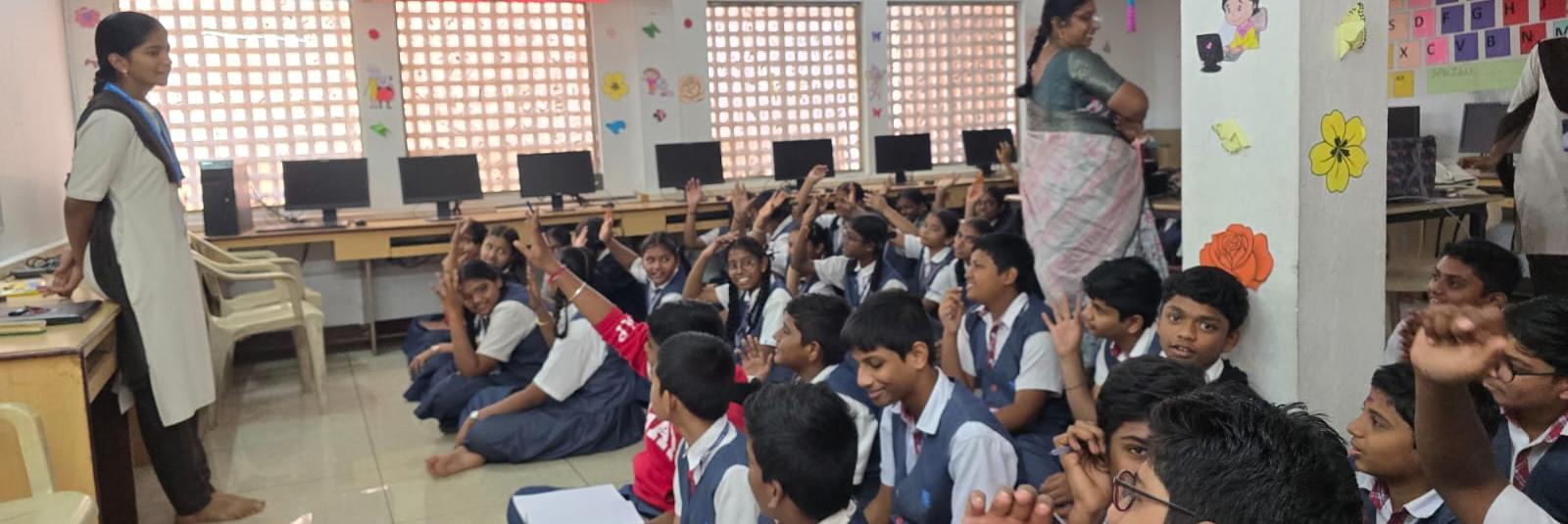
Saranya engaging the students with multiple interactive questions
To demonstrate real-life application, the Homework Reminder App was explained in detail. This example addressed a common student problem, forgetting homework due to lack of attention to diaries. The app concept showed how teachers could upload homework once, and students would receive gentle reminders in the evening and a final alert the next morning. This example helped students understand how AI-based tools can assist with responsibility and organization. In addition to this example, students were actively encouraged to imagine and propose their own app ideas. They were guided to think about problems they face in daily school life, such as time management, exam preparation, attendance tracking, or organizing study schedules. Students were then encouraged to frame simple prompts and explain how they would instruct AI to build such apps. This activity helped students realize that they are capable of turning ideas into digital solutions using clarity and creativity.
Session Overview:
• Saranya introduced students to the idea-to-application workflow using Vibe Coding. She explained how academic challenges such as homework tracking, reminders, or study planning can be converted into digital components using natural-language prompts. She also clarified how AI responds better to structured and clear instructions.
• Sai Charitha demonstrated how Vibe Coding generates functional User Interface components through simple instructions. She showed how prompts like “create a homework page” or “add a reminder section” instantly translate into screens and layouts, helping students visualize the connection between instructions and digital output.
• Momina guided students through the practical working of the Homework Reminder App. She explained teacher uploads, student views, and the reminder logic in a simple and relatable manner. She connected the example to real student problems, helping the students understand how everyday challenges can be transformed into useful digital tools through Vibe Coding.
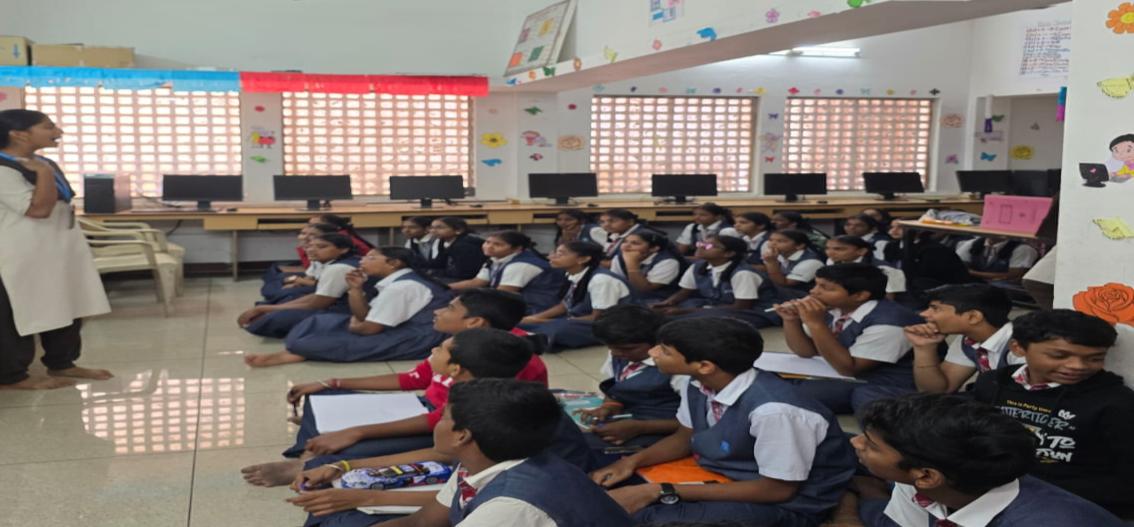
Saranya and Momina explaining about the Home Remainder App, and advantages and limitations of AI
The session concluded with a discussion on the limitations of AI and the importance of human thinking. Students were reminded that AI does not replace learning or intelligence but acts as a supportive tool that works best when guided correctly. Common misconceptions were cleared, and students were encouraged to use AI responsibly and creatively. To foster an environment of active participation, students were encouraged to take the lead by demonstrating their original concepts during the session. Participants were given the platform to experiment with Vibe Coding, transforming their personal ideas into functional, working applications using natural language prompts. Following their hands-on sessions, students acted as peer mentors, explaining to their classmates the specific conversational prompts they used to bridge the gap between a creative thought and a digital interface. This collaborative approach not only highlighted how iterative prompting enhances app functionality but also promoted clarity of thought, user-centric design, and collective innovation among the students Overall, the Hour of Code session at Sri Chaitanya School was highly engaging and impactful. It successfully fostered curiosity, confidence, and creative thinking among students, inspiring them to view technology not as a complex subject but as an accessible and empowering tool for problem-solving.
School: Sri Poojitha School
Date: 8th December, 2025
Time: 10.45 AM – 11.45 AM
The VVITU Guntur ACM-W Student Chapter conducted an engaging awareness session on Artificial Intelligence, Prompt Engineering, and Vibe Coding at Sri Poojitha School. The objective was to introduce students to emerging technologies in a simple and practical way, helping them connect these concepts to real-life situations.
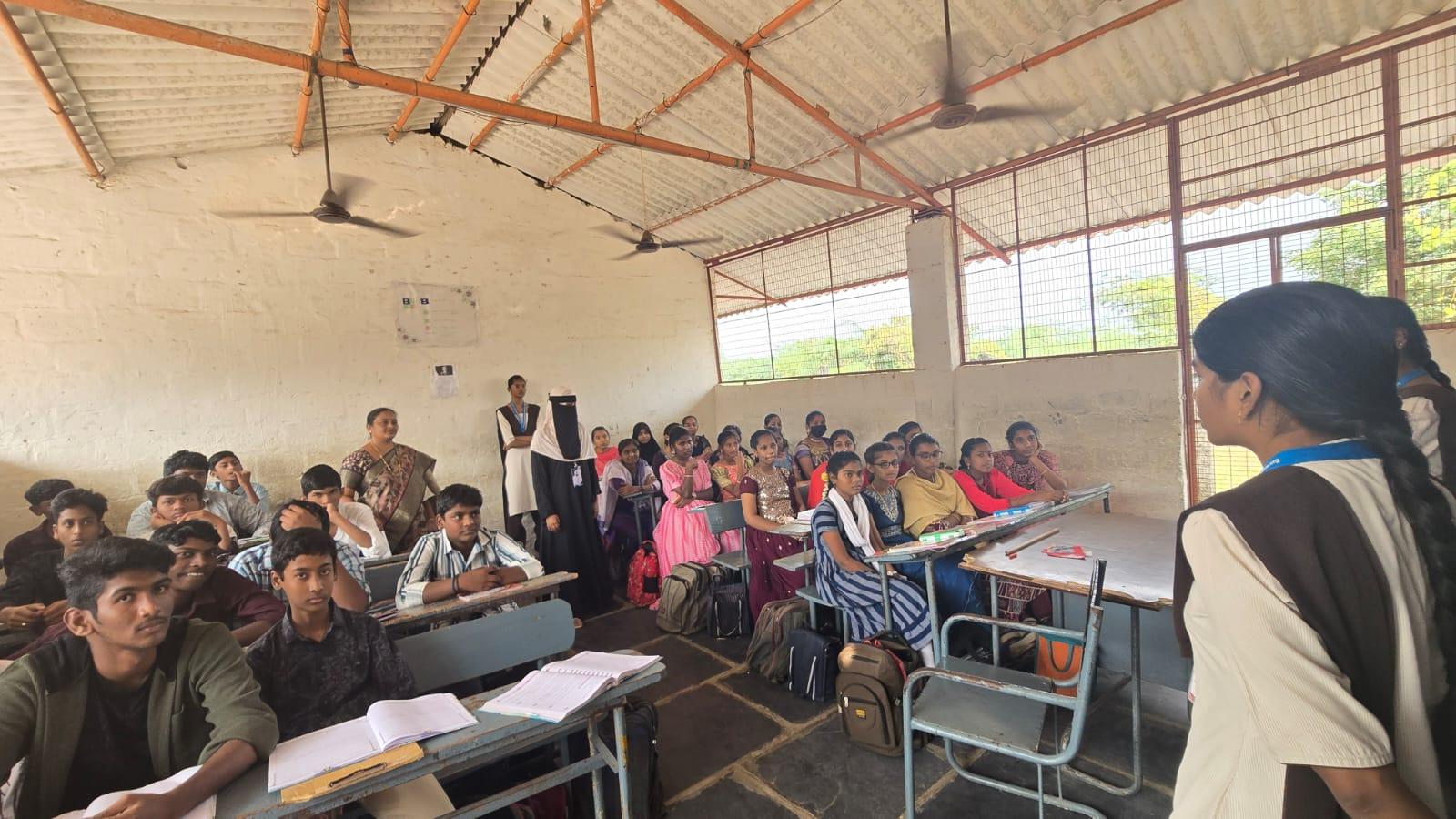
Warm Introduction about the session by officers Momina, Saranya, Sai Charitha, Maheeja
The ACM-W Student Chapter organized a comprehensive and engaging session on Vibe Coding at Sri Poojitha School with the objective of introducing students to the practical use of Artificial Intelligence for solving everyday problems.
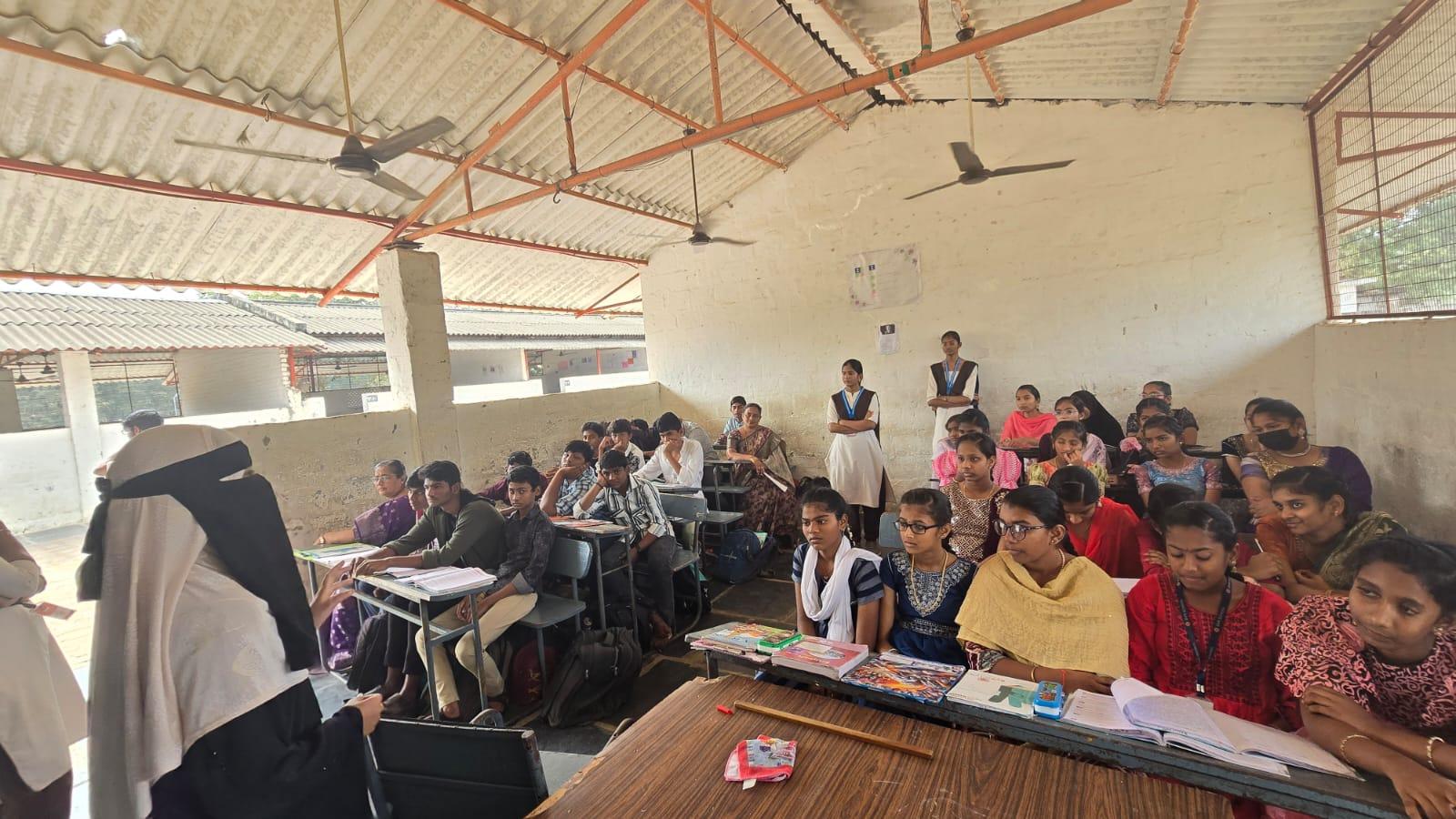
Officer Momina is guiding students on how to leverage AI for their daily tasks as a stepping stone toward greater efficiency
The session was designed to make students comfortable with AI concepts while encouraging creative and independent thinking. At Sri Poojitha School, the team demonstrated how Vibe Coding removes traditional coding barriers and enables students to build functional academic tools through simple conversational instructions. Saranya explained how AI interprets structured prompts, helping students understand the importance of clarity and context when expressing ideas. Sai Charitha guided students through creating note pages, reminders, and assignment sections using chat-based instructions, reinforcing the concept of intuitive tool generation. Momina showcased the Homework Reminder App and led students through examples related to study planning and schedule organization. Deepika encouraged students to propose their own ideas and helped them convert those ideas into planners, trackers, and reminder modules through effective prompting. Following these demonstrations, students were encouraged to think beyond homework-related tasks.
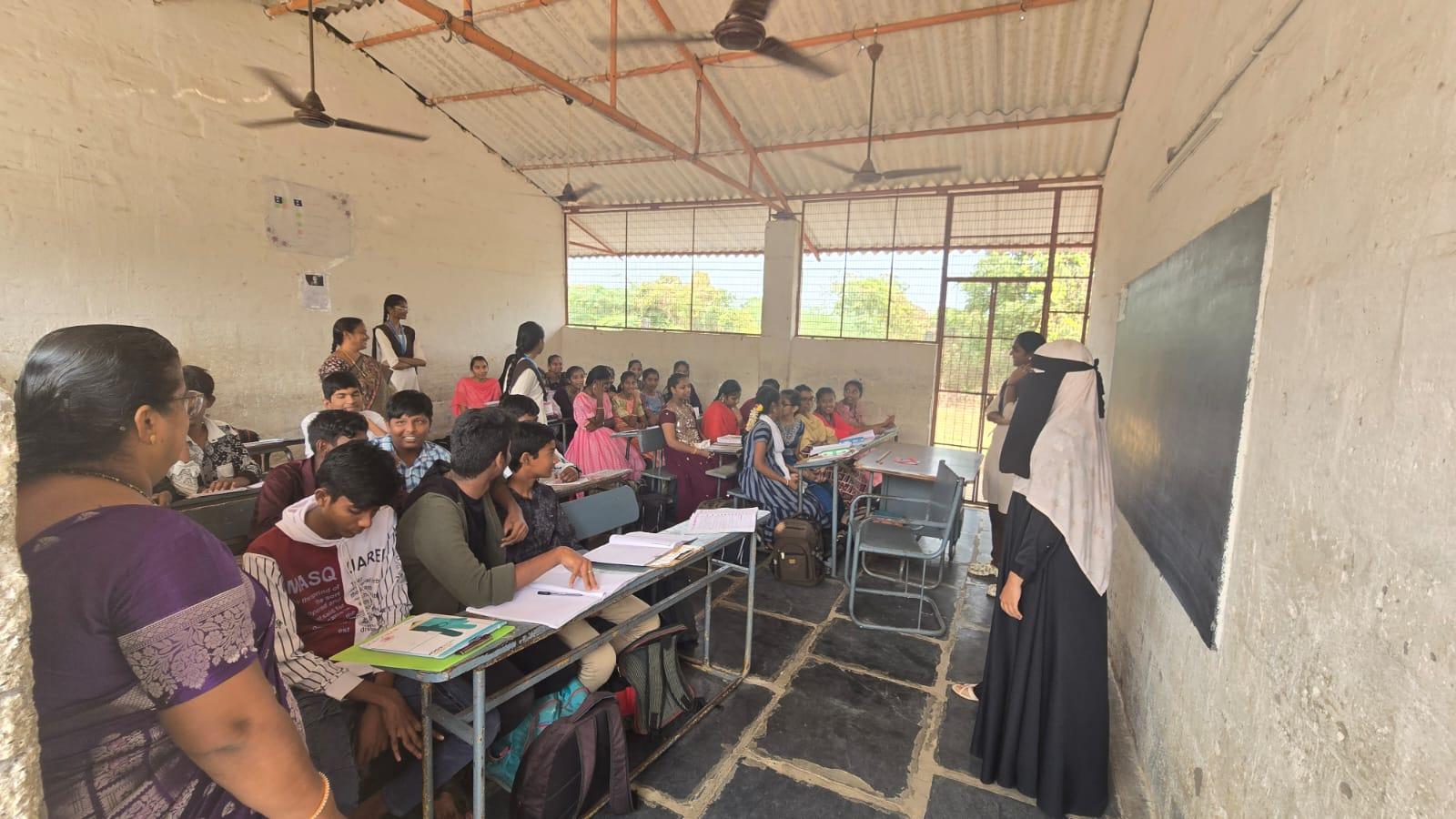
Officer Saranya is breaking down the logic behind AI prompts, ensuring students understand how to communicate with technology effectively
Once the challenges were identified, the focus shifted to ideation. Students explored how simple, accessible applications could serve as personalized assistants. They brainstormed and discussed several high-utility concepts, including:
• Dynamic Exam Planners: Tools that break down vast syllabi into achievable daily goals.
• Daily Study Trackers: Apps designed to gamify and monitor academic progress.
• Smart Attendance Reminders: Proactive systems to ensure students remain compliant with college regulations.
• Timetable Organizers: Centralized hubs for managing lectures, labs, and extracurricular commitments.
• Empowerment: Students gained the confidence to stop viewing technology as a mystery and start seeing it as a tool they can control.
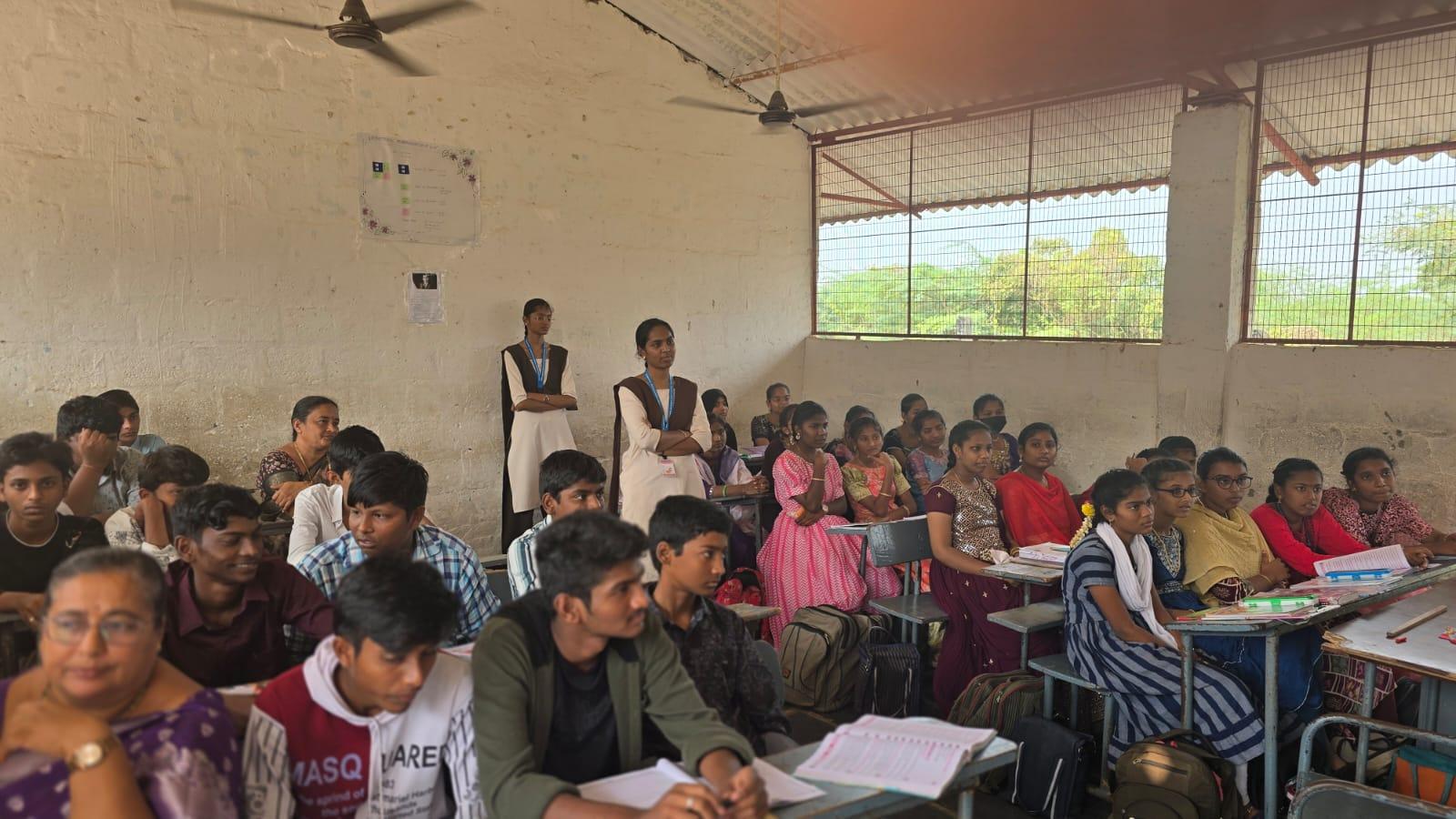
Students are attentively engaged in the ACM-W Student Chapter outreach session
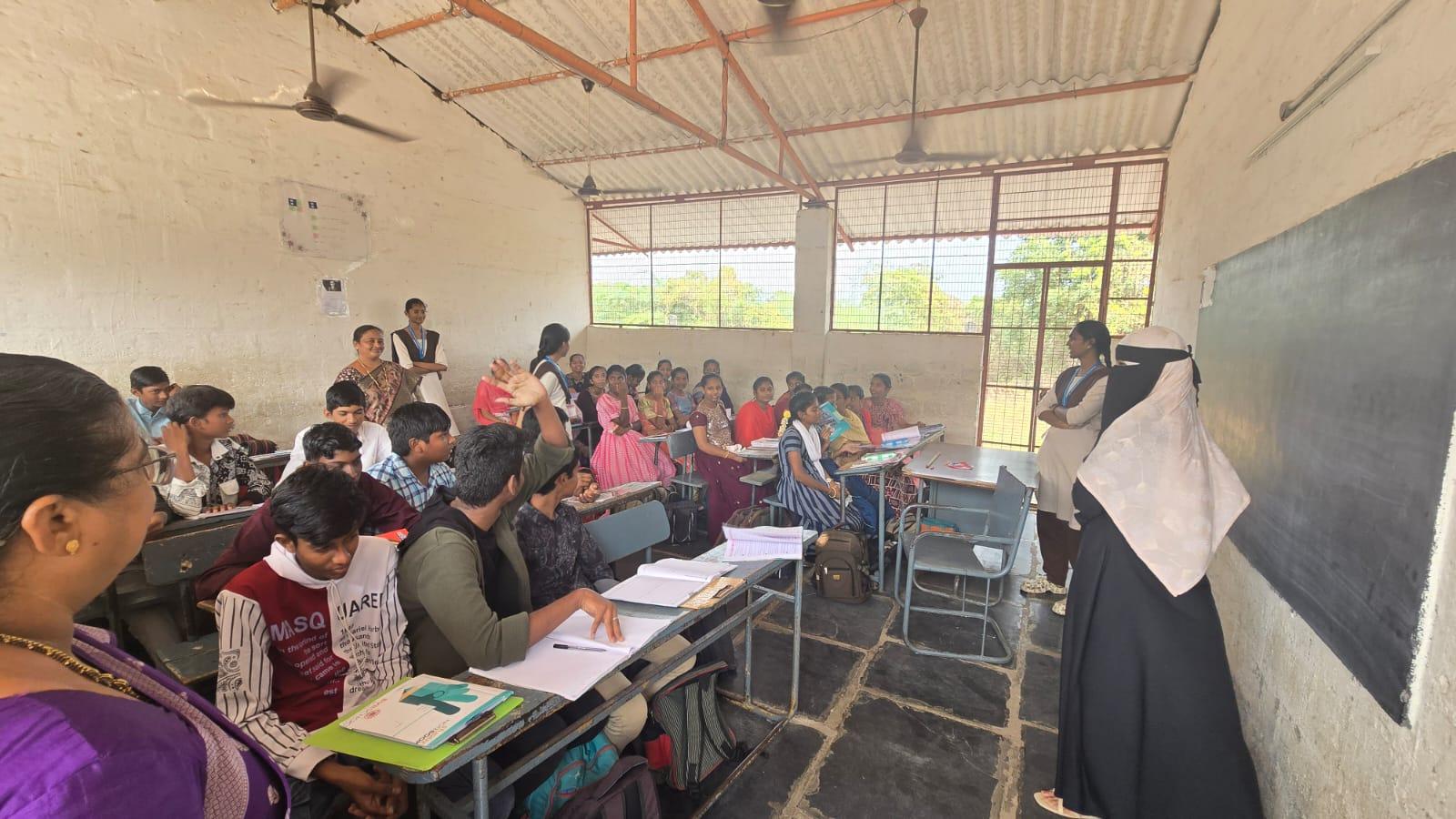
Students are actively participating in the ACM-W Student Chapter outreach session, collaborating with the ACM-W team to explore how digital tools can streamline their daily academic routines.
Session Overview:
• Saranya opened the session by helping students understand how AI processes information and why prompt clarity is important. She related AI behavior to students’ daily routines, making the concepts simple and relatable.
• Sai Charitha demonstrated how chat-based Vibe Coding can instantly generate interfaces for notes, reminders, and assignment sections. She explained how conversational instructions replace traditional coding and showed how small improvements in prompts refine component output.
• Momina presented the academic use cases such as study planners, timetable modules, and homework pages. She explained the Homework Reminder App structure and showed how it supports discipline and organization.
• Deepika led the idea-generation activity, encouraging students to identify problems such as exam planning, study tracking, and time management. She helped them frame prompts like “create a weekly planner” or “add an attendance reminder”, reinforcing creativity and clarity
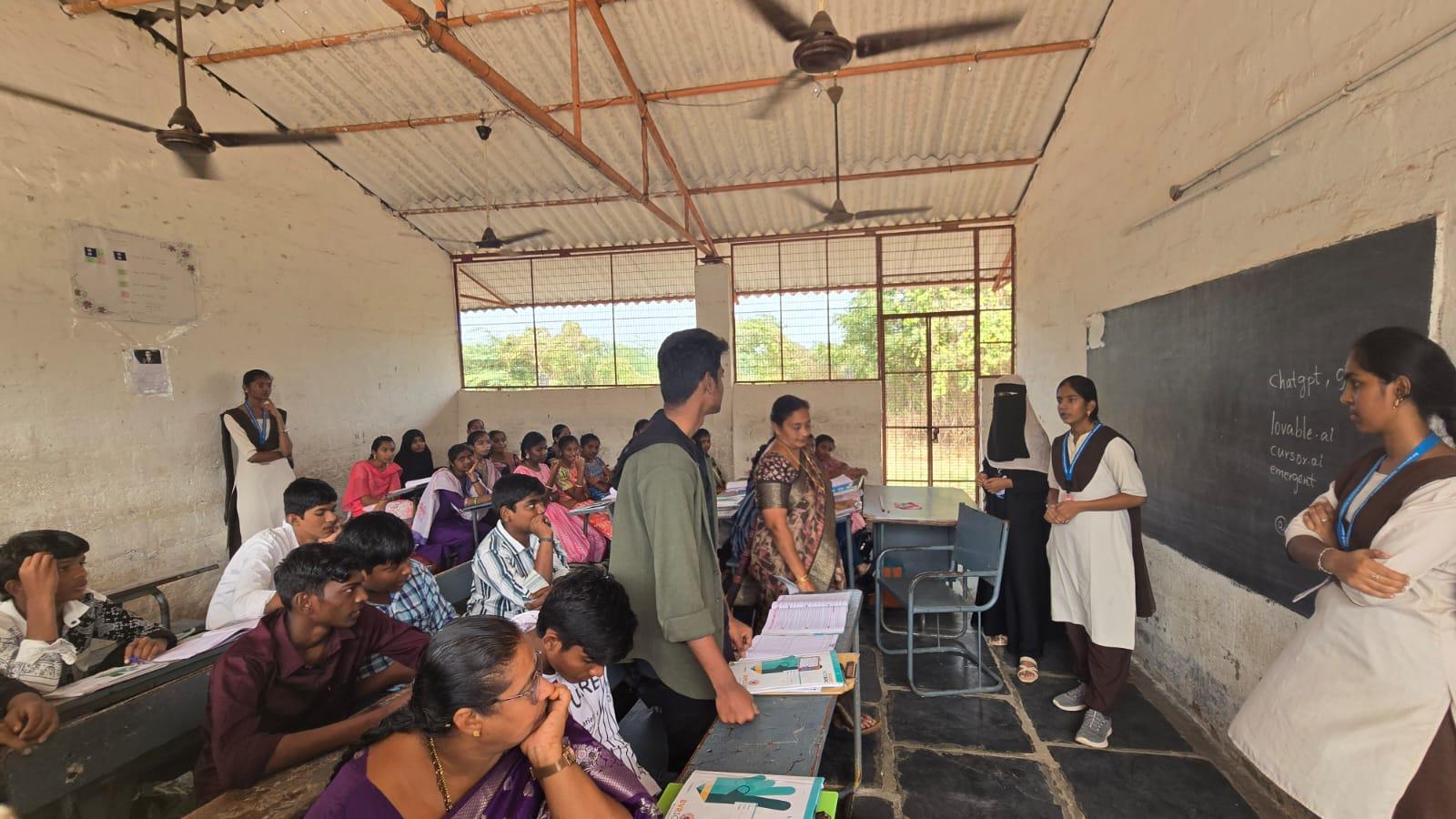
Students actively shared their feedback, articulating how the session broadened their understanding of AI-guided problem-solving
School: Oxford Olympiad School
Date: 9th December, 2025
Time: 9.30 AM – 10.30 AM
The VVITU Guntur ACM-W Student Chapter successfully conducted an in depth and engaging interactive session At the Oxford Olympiad Campus, the session was designed to help students express their academic needs clearly and convert them into functional digital tools. Saranya introduced the concept of prompt-based development, showing how AI responds to precise instructions. Sai Charitha demonstrated how flashcards, revision organizers, and reminder pages can be created instantly using conversational prompts. Momina explained the academic value of these components and showed how students can structure their tools for better productivity. Deepika facilitated an activity where students generated their own pages and refined their prompts, helping them understand the impact of iteration. The session promoted structured thinking, creativity, and curiosity.
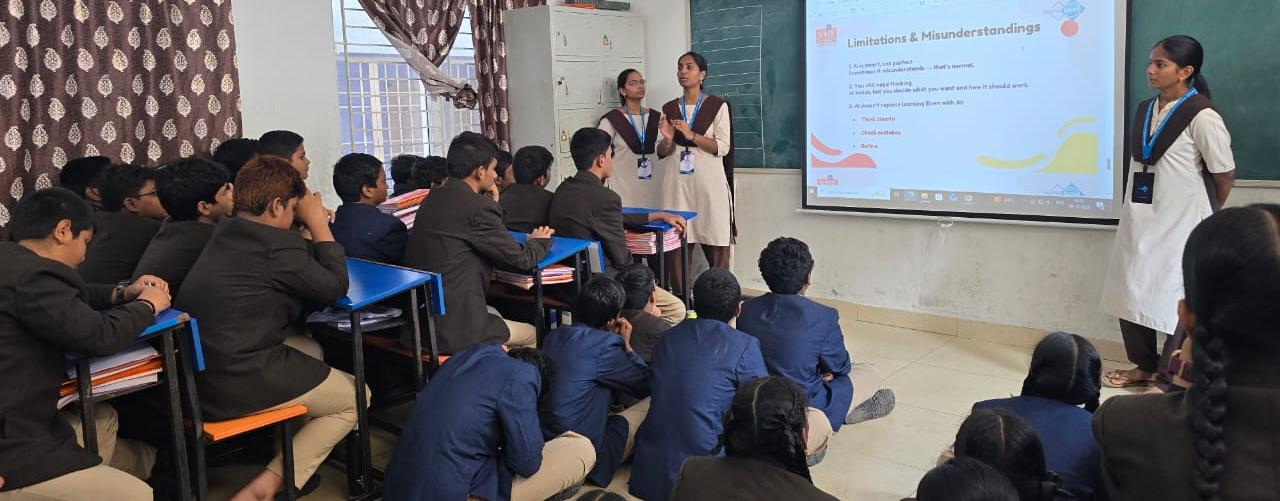
Charitha explaining about the divergent use of prompts, through which AI can give meaningful and useful outputs
The session commenced with an interactive discussion that encouraged students to reflect on their daily interaction with technology. Students were asked to identify the digital tools they regularly use, such as mobile applications, online learning platforms, and reminders. This discussion helped establish relevance and set the foundation for explaining AI as a supportive system that works based on human
instructions. AI was described as a system that listens to input, interprets intent, produces responses, and improves through refinement, rather than acting independently or unpredictably.
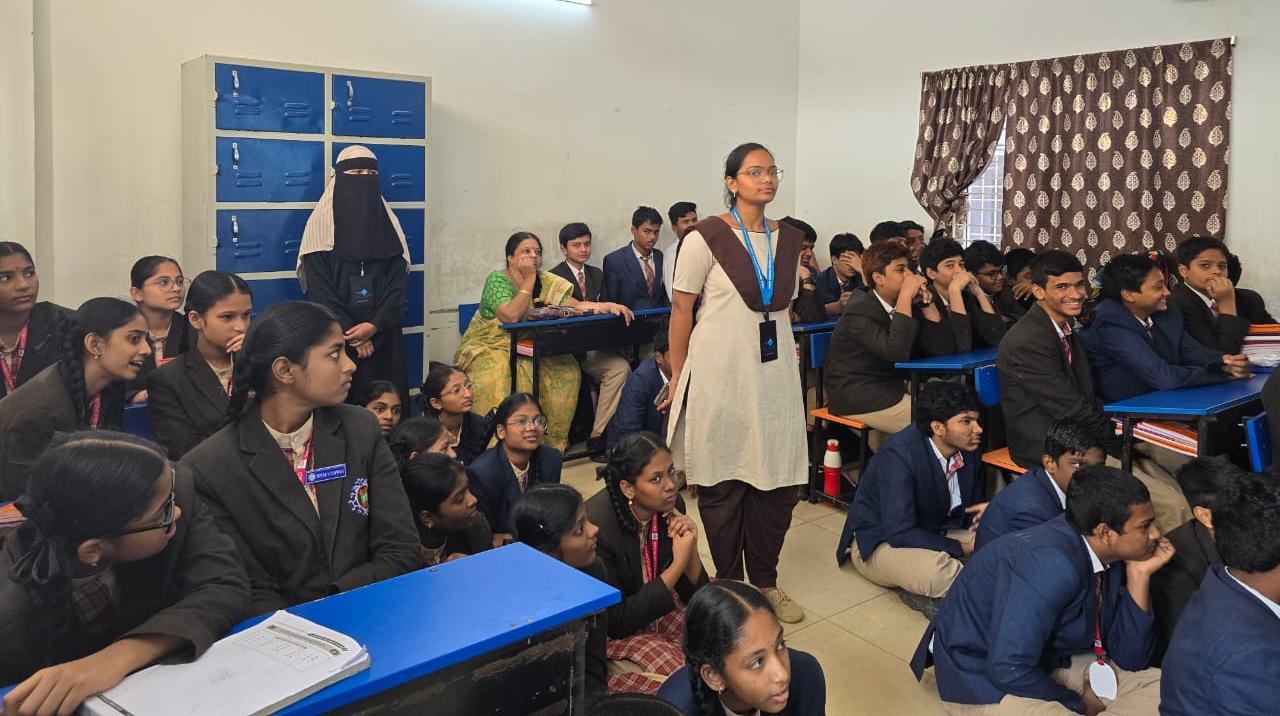
Photograph while the session is going on in a friendly manner
The session focused on a crucial concept in modern technology: Expected vs. Reality. Chapter officers Saranya, Charitha, Deepika, and Momina took turns explaining that in Vibe Coding, the first output from an AI may not always match a student's initial vision. They taught the students that refining instructions is not a failure, but a normal and necessary part of the learning process. To demonstrate this cycle, the officers guided a student through a live build of a Homework Reminder App:
• Phase 1: The Initial Concept: A student provided a simple natural-language prompt to create the basic framework of the app.
• Phase 2: Identifying Gaps: Upon seeing the first version, the student realized it met the basic "Reality" but lacked specific features they "Expected," such as priority levels for assignments.
• Phase 3: Iterative Refinement: Led by the officers, the student refined their prompt to add a "high-priority" button and a notification feature.
• Phase 4: The Functional Result: Through repeated effort and thoughtful adjustments, the student successfully transformed their original idea into a fully functional app that worked exactly as they wished.
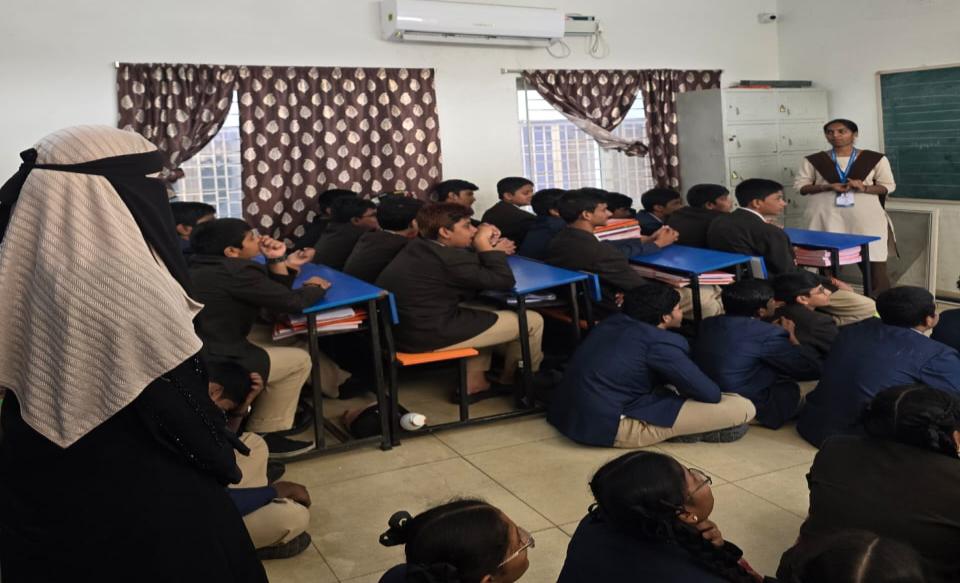
Session Overview:
• Saranya introduced prompt-based development, showing students how clear instructions shape the final digital output. She demonstrated how
precise language improves accuracy and helps AI understand student intentions.
• Sai Charitha guided students in creating digital flashcards, study organizers, and reminder pages. She showed how prompts generate structured UI
components and encouraged students to refine their prompts for better results.
• Momina explained how academic modules - subject cards, assignment lists, revision timelines are built through Vibe Coding. She connected each
component to real classroom requirements and explained how these tools support productivity.
• Deepika engaged students in designing their own tools. She facilitated hands-on activities where learners built flashcards, planners, and daily task components.
The session concluded with a discussion on AI limitations and ethical usage, ensuring students developed a balanced understanding of technology. Overall, the session at Oxford Olympiad School was highly interactive, educational, and inspiring.
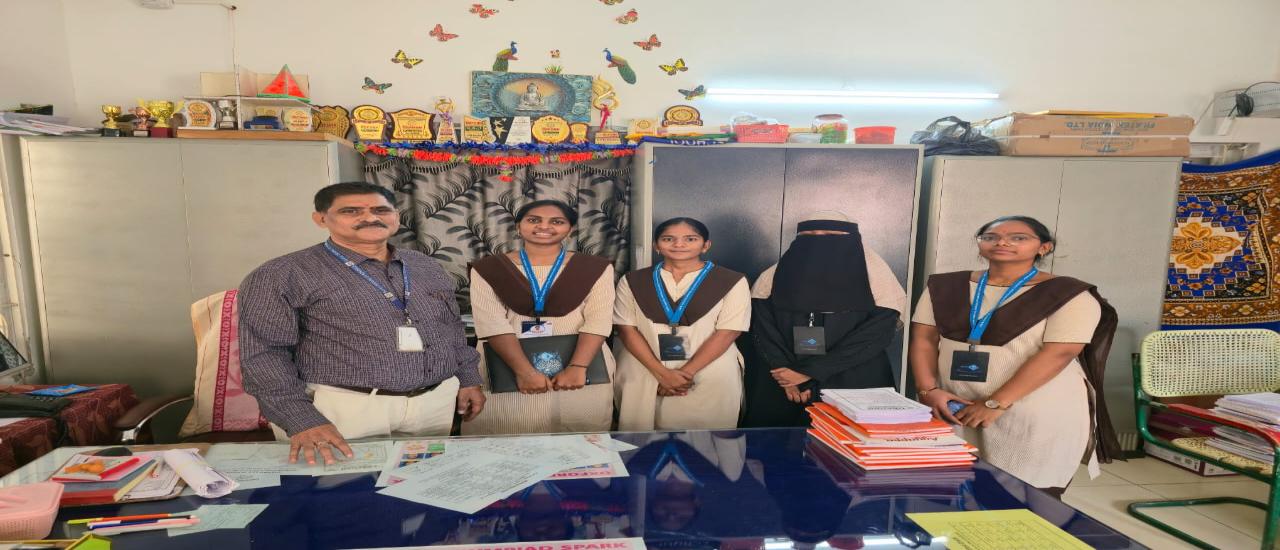
Group photo with the representative of Oxford Olympiad School
School: Naveena Primary School
Date: 9th December, 2025
Time: 11.00 AM – 12.00 AM
The VVITU Guntur ACM-W Student Chapter conducted a thoughtfully designed and age-appropriate interactive session in Naveena Primary School, the team delivered a simplified and highly visual demonstration of Vibe Coding to suit younger learners. Saranya introduced AI in simple terms, describing it as a system that listens and responds to clear instructions. Sai Charitha demonstrated how basic prompts such as “create my homework page” or “add a test date button” can produce complete UI components. Momina displayed simple subject pages and icons to help students understand how their instructions translate into digital elements. Deepika engaged the students with hands-on tasks where they created small pages and added features through simple prompts. This session built early confidence and familiarity with technology.
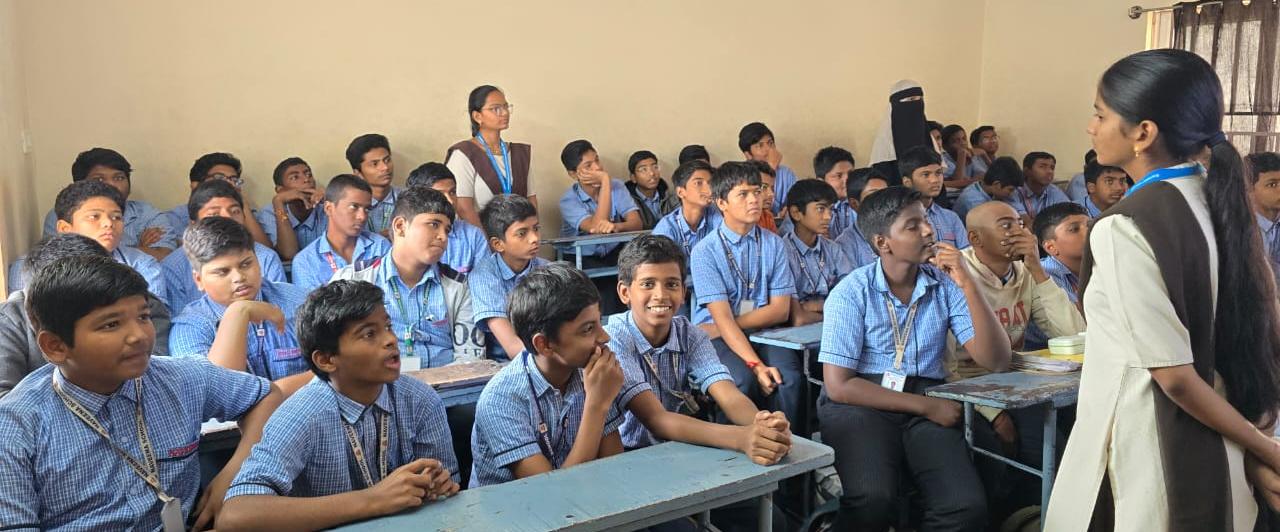
Saranya and Sai charitha addressing students and explaining core concept of Prompts
The session began with a casual and cheerful introduction, asking students about their favorite activities, such as watching videos, playing games, and using mobile phones. This approach helped capture their attention and created a comfortable learning environment. AI was explained as a “smart helper” that listens carefully and helps when given clear instructions. The use of simple language and real-life comparisons made complex ideas easier for students to grasp. Students were introduced to the concept of prompts through everyday examples. They were told that just like explaining instructions to a friend or teacher, explaining ideas clearly helps AI understand better. The idea of Vibe Coding was simplified as “telling the computer what you want it to do,” removing any fear associated with technology or coding.
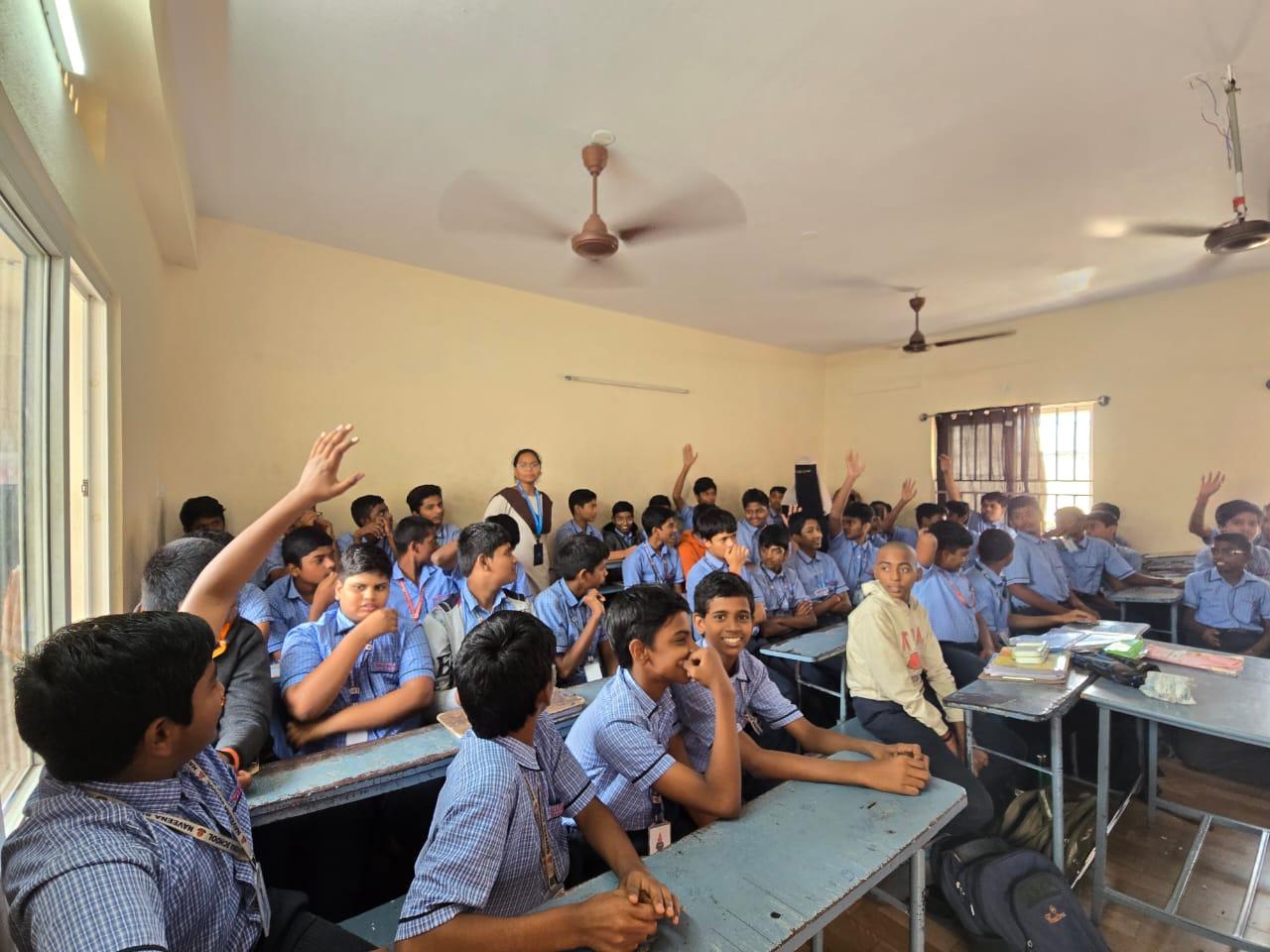
Active curiosity and participating picture of the students of Naveena Primary School
To ensure the technical concepts were accessible to younger learners, the session utilized a narrative-based approach. The primary example used was the Homework Reminder App, which was presented as a story rather than a technical tool. In this story, the smartphone was personified as a "friendly assistant" dedicated to student success. The officers described a day in the life of a student where the app provides a gentle nudge in the evening to review assignments and a helpful alert in the morning to ensure nothing is forgotten. This storytelling method allowed students to visualize technology not as a complex machine, but as a supportive partner that helps build positive life habits.
Session Overview
• Foundation & Concept (Led by Saranya): Saranya introduced the core concept of Artificial Intelligence by defining it as a "Smart Helper". By using simple terms suited for younger learners, she demystified how AI follows specific instructions. Her segment focused on building basic comfort, teaching students how to interact with technology using easy-to understand prompt structures.
• Visual Page Creation (Led by Charitha): Charitha moved the session into the "creation phase" by demonstrating how simple sentences can build a digital world. Using prompts such as “create my homework page” and “add a button for test dates,” she showed students how their spoken words instantly generated visual elements on the screen. This demonstration was specifically tailored to primary students to show the immediate connection between a command and a visual result.
• Digital Component Integration (Led by Momina): Momina focused on the academic interface, showcasing how subject icons, note-taking pages,
and functional buttons are organized. She bridged the gap between student instructions and real digital components. Her detailed explanations helped students clearly visualize how their individual ideas could transform into a professional-looking digital workspace.
• Hands-on Exploration (Led by Deepika): Deepika facilitated the highly interactive "Young Creators" activity. Under her guidance, students framed their own simple prompts, designed their own pages, and added personalized features. She maintained a lively atmosphere, ensuring every child felt confident and capable while exploring these new creative tools. The officers emphasized that while technology is a powerful tool, it must be used creatively and ethically.
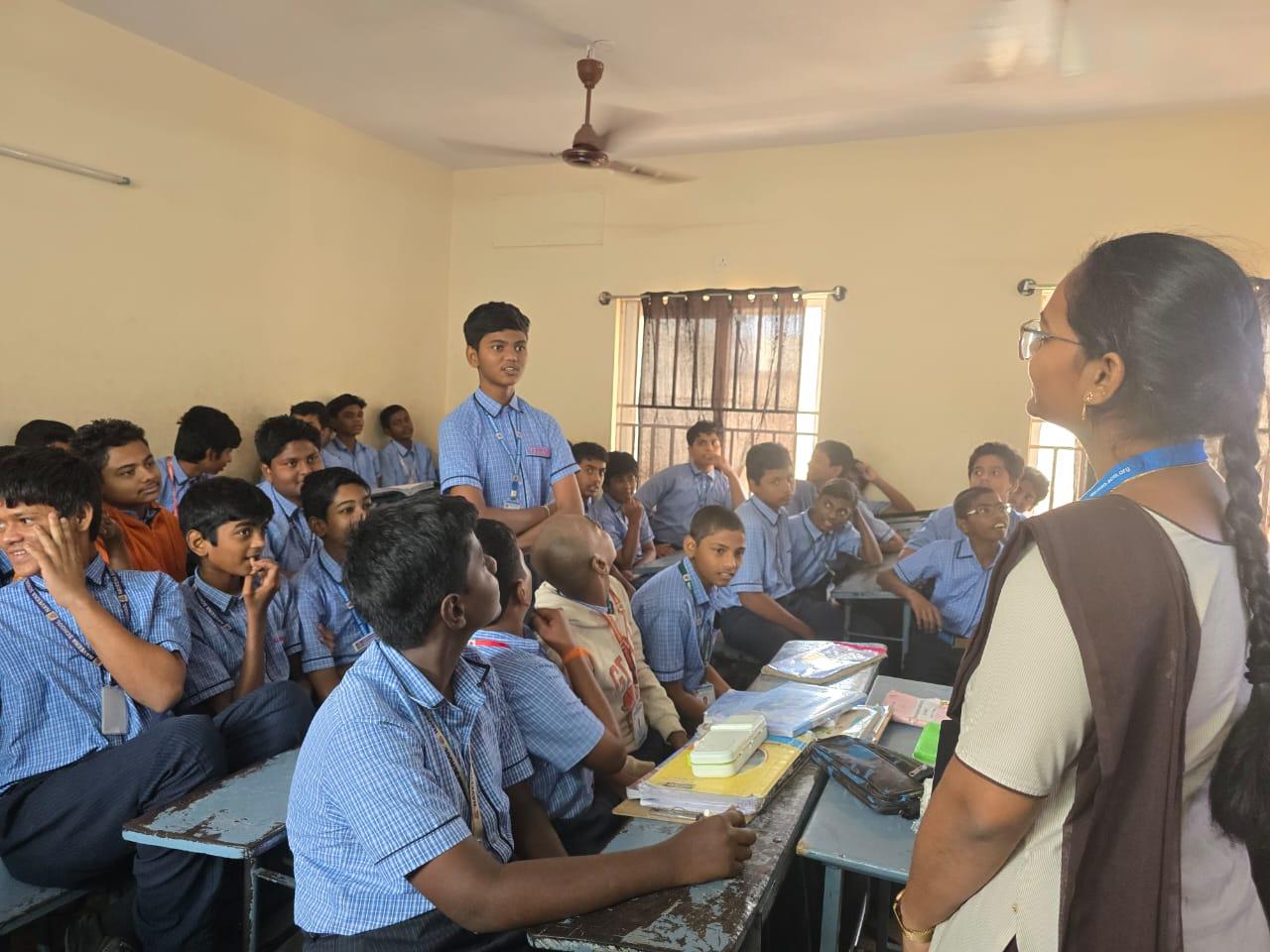
Deepika clarifying students doubts
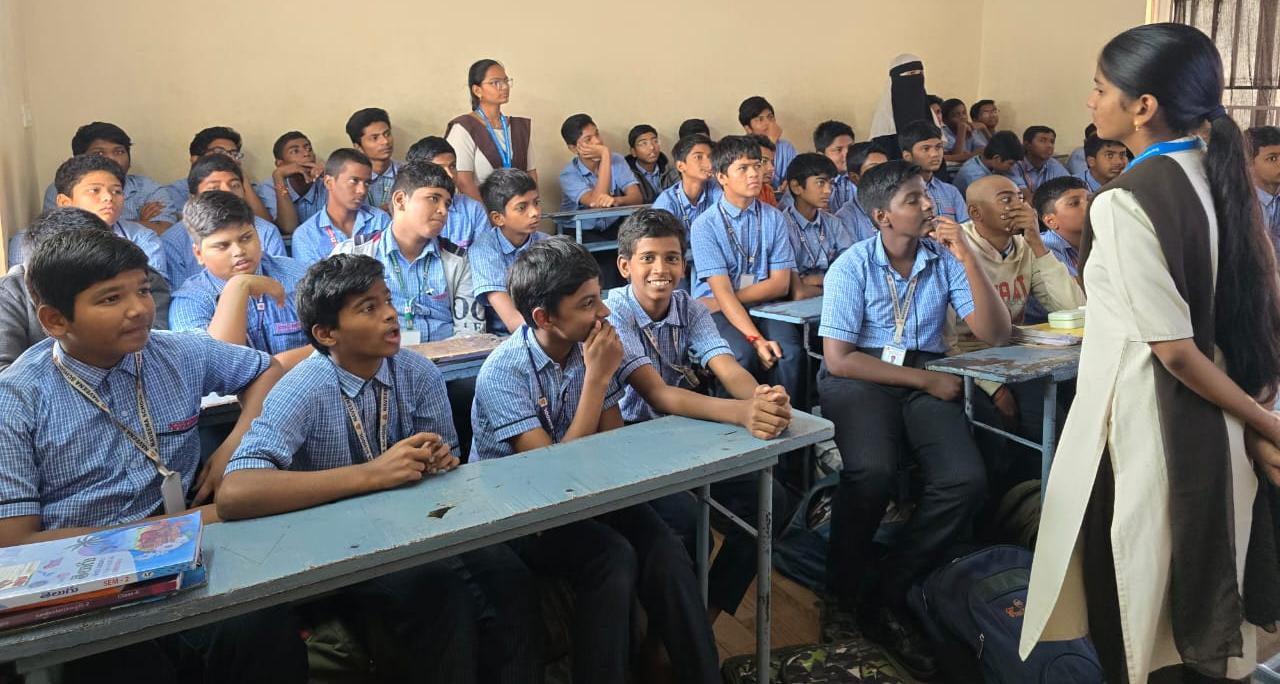
ACM-W Chapter officers engaging a classroom of attentive students during an interactive "Hour of Code" session
School: Zilla Parishat High School
Date: 10th December, 2025
Time: 10.00 AM – 11.00 AM
The VVITU Guntur ACM-W Student Chapter conducted a comprehensive awareness and educational session in Zilla Parishat High School, students explored how natural-language instructions can transform simple academic ideas into complete application components. Saranya explained how clarity in prompts guides AI to create structured outputs. Sai Charitha demonstrated real-time Vibe Coding, showing students how layouts for subject planning, homework tracking, or test reminders can be generated instantly. Momina highlighted the usefulness of these tools in supporting academic organization and connected each example to student routines. Deepika led an activity where learners proposed tools, framed prompts, and refined them to improve the results. The session helped students recognize that innovation comes from clarity, thoughtfulness, and structured communication—not coding complexity.
The session began by discussing students’ daily routines and challenges, helping them connect technology with real-life experiences. AI was explained as a helpful system that works best when guided with clear instructions. Students were reassured that AI is not meant to replace human effort but to assist in organizing tasks and solving problems more efficiently.
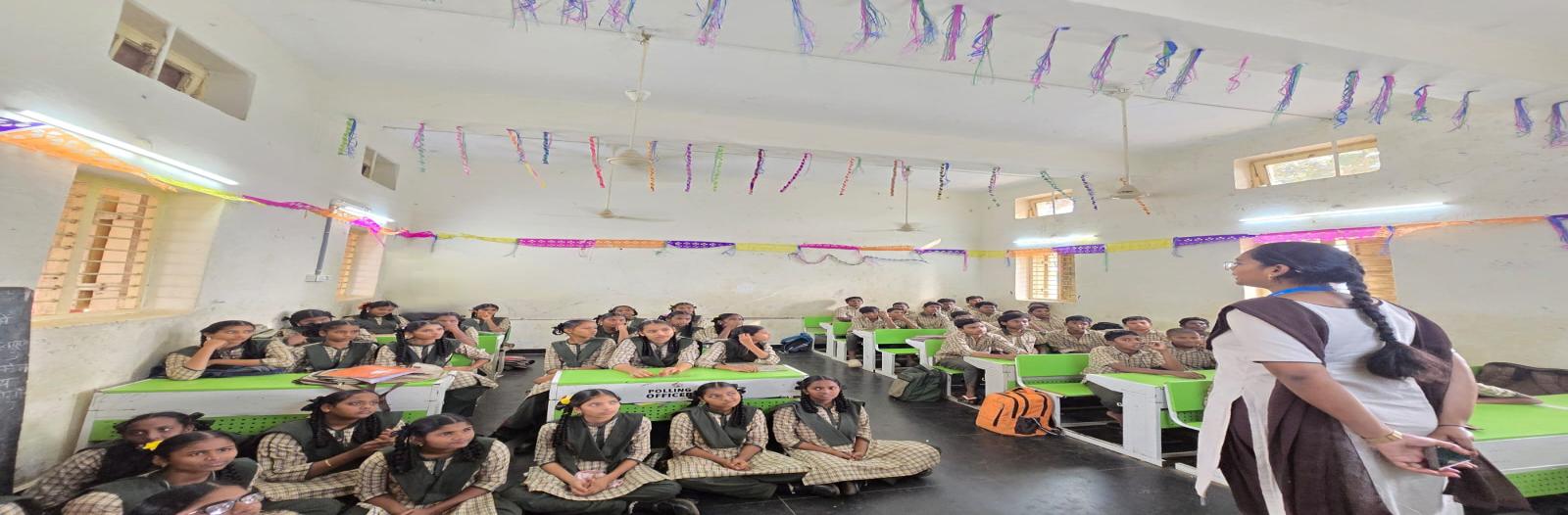
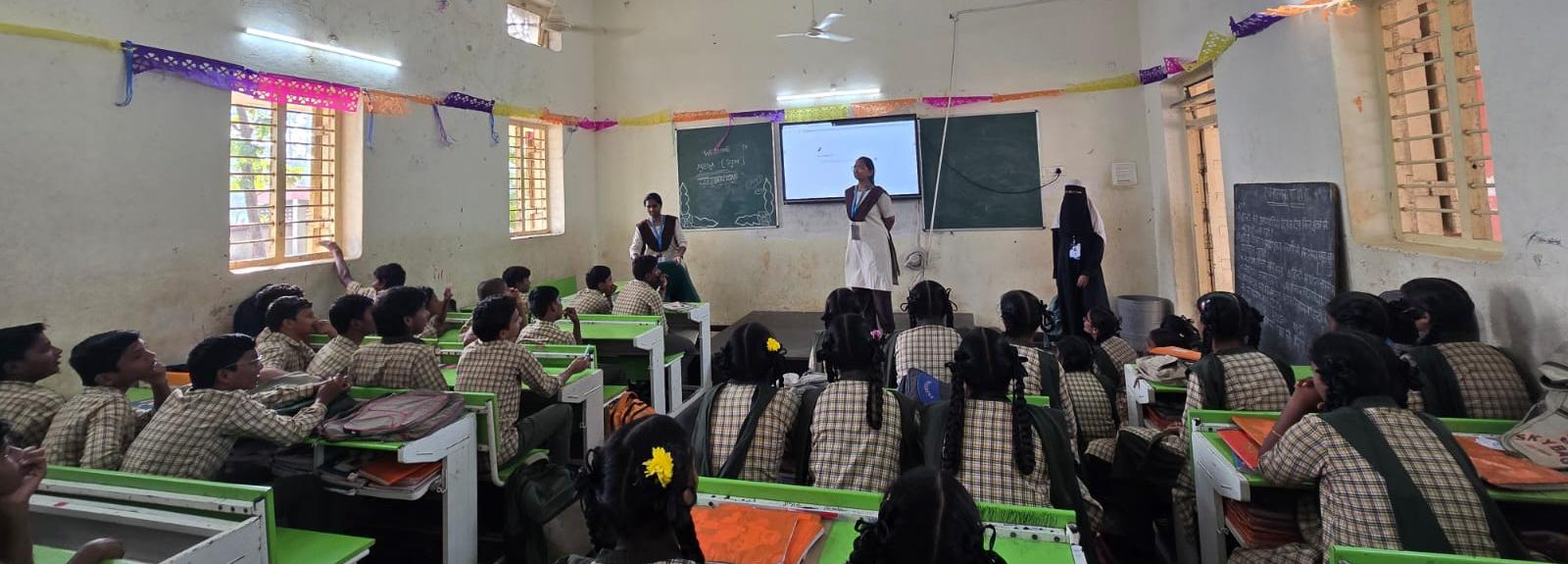
ACM-W student chapter officers leading an interactive "Hour of Code" session on the future of natural-language programming.
The importance of prompts was emphasized throughout the session. Students learned that clear instructions lead to better results and that refining prompts helps AI improve. The concept of Vibe Coding was introduced as a method where students can create applications by explaining ideas rather than writing code. This explanation helped students feel confident and capable, regardless of their technical background. The Homework Reminder App was used as a detailed example to demonstrate how AI can help manage academic responsibilities. The reminder system, including evening notifications and a morning alert, was explained step by step. Students clearly understood how such an application could reduce stress and prevent last-minute panic before school.
• The student used a simple, everyday sentence to ask the AI to build the basic app structure.
• When the app appeared, the student saw the "Reality" of the code—it worked, but it was missing the features they "Expected," like a way to mark which homework was most important.
• With the officers' help, the student improved their instructions (prompts) to add new things like a "high-priority" button and alerts.
• By trying again and making smart changes, the student turned their simple idea into a finished app that worked perfectly for their needs.
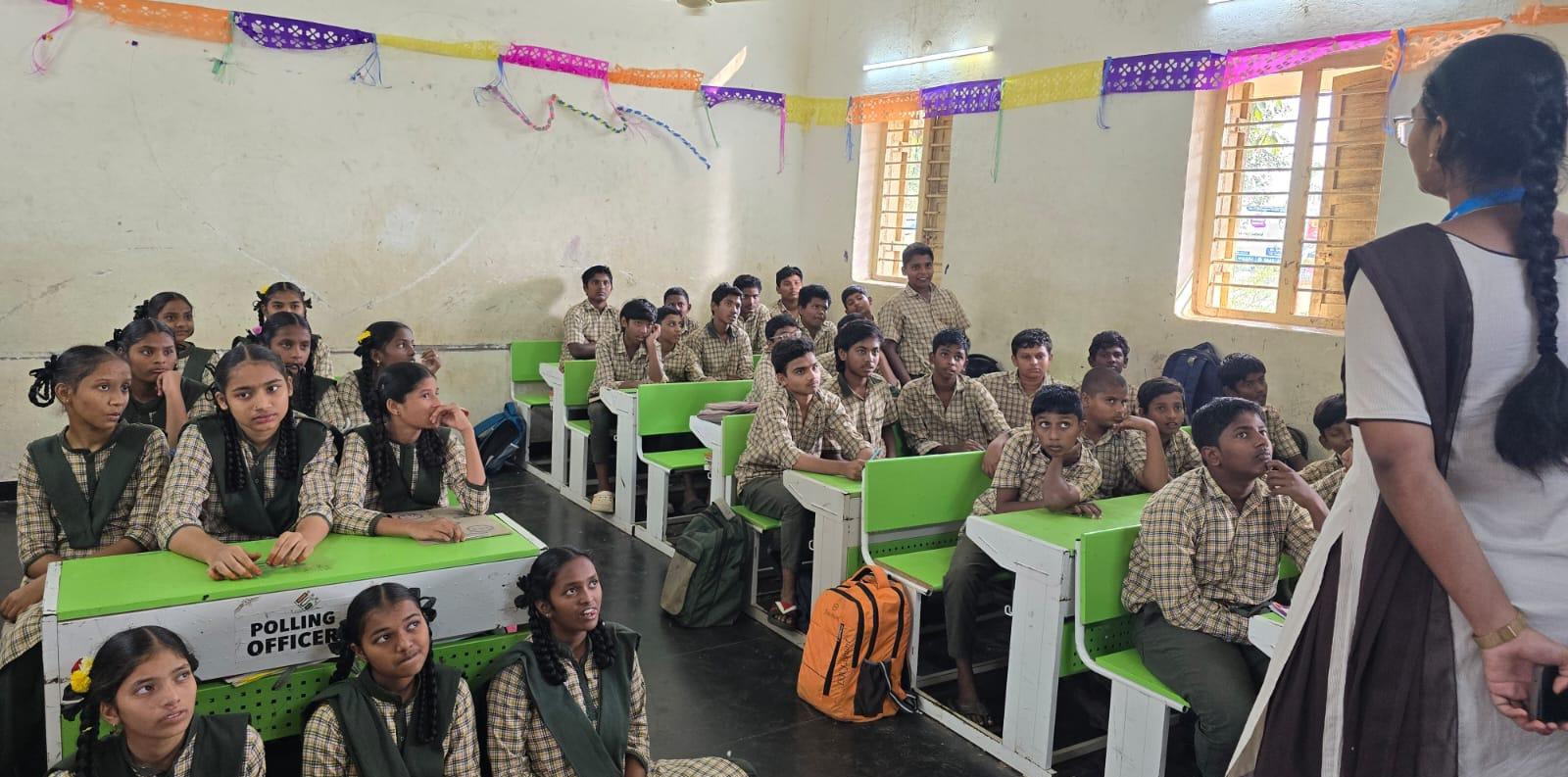
Beyond this example, students were encouraged to think creatively and independently. They were asked to identify problems from their daily lives, such as managing revision time, tracking attendance, or organizing exam schedules. Students practiced framing prompts to explain how AI could help solve these problems. This activity helped students realize that Vibe Coding is flexible and can be applied to many situations.
Session Overview:
• Saranya explained how clarity in natural-language instructions helps transform student ideas into usable application components. She introduced students to the concept of guiding AI with precise academic requirements.
• Charitha demonstrated Vibe Coding’s real-time output generation. She used prompts to build planners, reminder widgets, subject pages, and assignment components, showing how natural language replaces coding.
• Momina explained how digital tools like homework trackers, subject planners, and test schedules support academic organization. She showed students how such tools are structured, reinforcing real-use application building.
• Deepika facilitated the creative activity where students proposed app ideas, framed prompts, and observed the immediate UI generation. She guided them through iterative refinement, making the session interactive and solution-focused. The session concluded with encouragement for students to continue exploring technology with confidence and curiosity. Overall, the session at Zilla Parishat High School was impactful, motivating, and empowering.
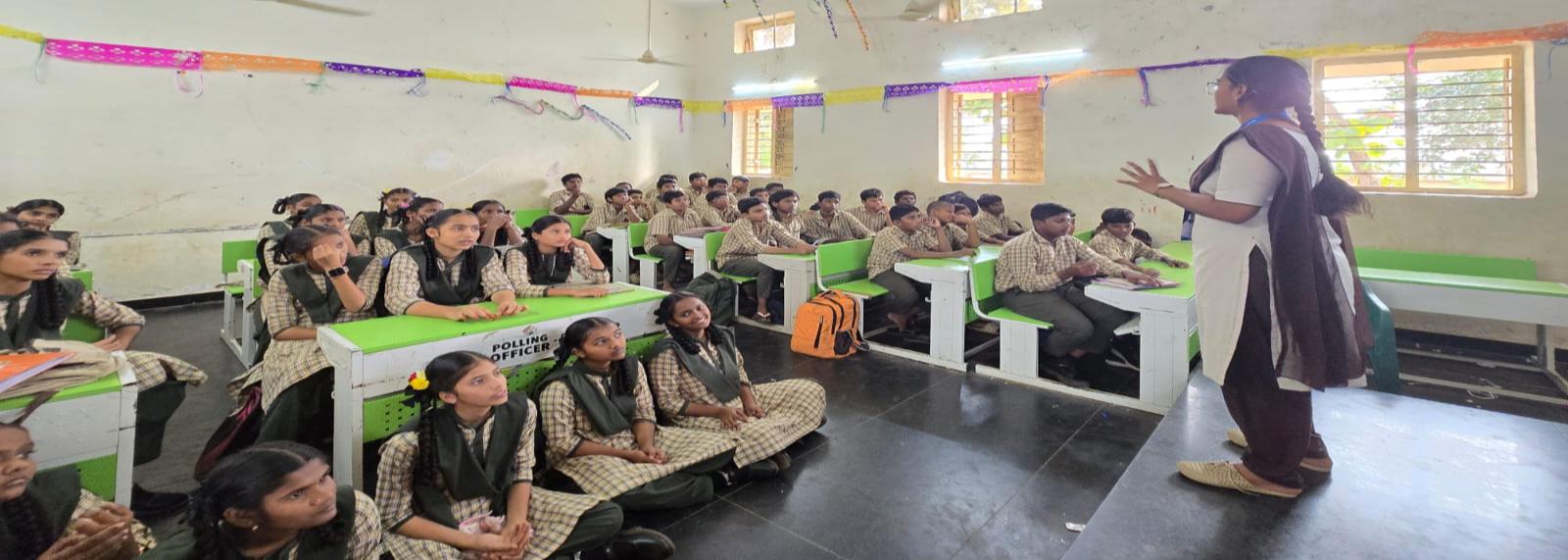
Officer Deepika takes a stand on the dais to facilitate a creative activity, guiding students as they propose app ideas and refine their prompts to observe immediate AI-generated results.